

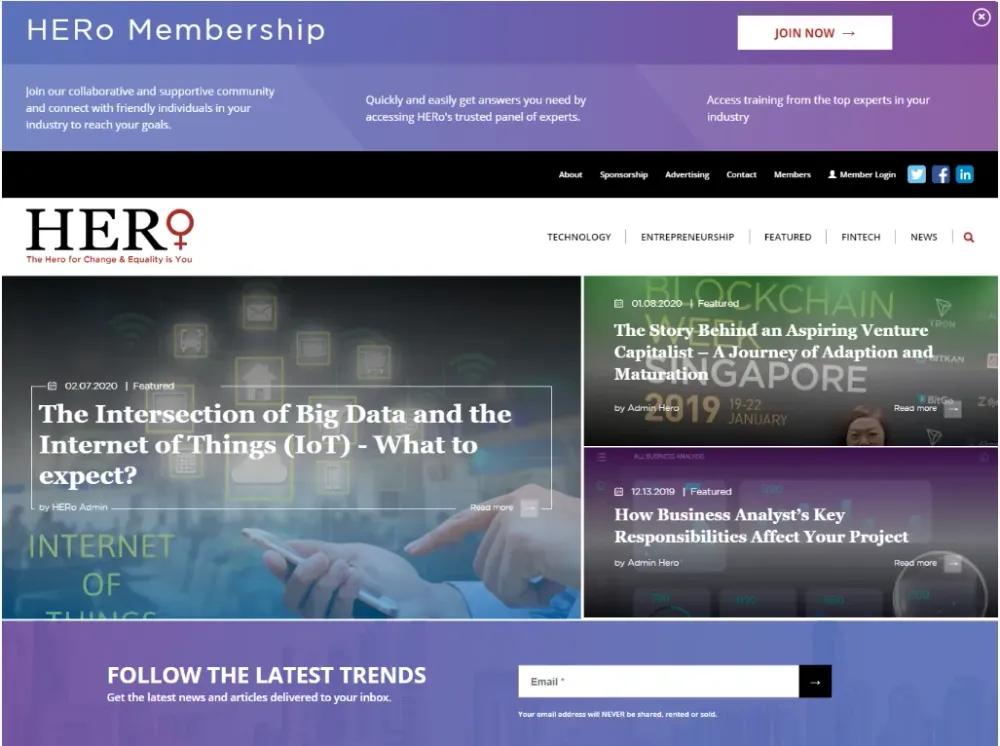
The goal of the project is to quickly turn an approved PSD layout into a live, responsive, and fully manageable WordPress website that drives traffic and conversions. I built a custom theme from scratch with pixel-perfect design fidelity, added banner click and view analytics, a personalized dashboard for Members, front-end posting for premium users, custom post types, and custom fields for different content scenarios.
Tasks and Goals
- Pixel-perfect coding from PSD: clean semantic HTML5/CSS3, preserved typography and grid.
- Responsiveness: correct rendering from mobile to 4K displays, optimized media.
- Editorial manageability: content structure via custom post types (CPT) and custom fields.
- Monetization and tracking: a banner clicks & views counter plugin to collect statistics.
- Member dashboard: a dedicated panel for Members with role-based access.
- UGC/front-end publishing: premium users can add posts from the front end with moderation.
- SEO readiness: technical foundation, speed, structured data, clean URLs.
Technological Approach and Stack
- WordPress as the CMS for a fast content cycle.
- Custom theme: modular architecture, BEM classes, SCSS, build process (minify, autoprefix).
- JS: lightweight interactions without bloating the bundle (ES modules, no unnecessary libraries).
- CPT: separate types for banners, news/articles, testimonials, FAQ, etc.
- Custom Fields (ACF or custom metaboxes): fields tailored to specific templates and blocks.
- “Banner Clicks & Views” plugin: custom-built with impression/click logging, UTM parameters, CSV exports.
- Member dashboard: separate route/templates, profile pages, activity history, forms.
- Front-end forms for premium roles: create/edit posts, preview, “pending moderation” status.
- Security: nonces, capability checks, upload restrictions, input validation.
- Performance: image lazy loading, modern formats (WebP/AVIF), page and fragment caching.
Implementation by Blocks
1) PSD → HTML → custom theme
- Pixel-perfect templates: home, blog/categories, single post, landing pages, contact page.
- Component approach: Hero, banner zones, post cards, sliders, CTA sections, FAQ.
- Responsive grids, fluid typography, proper spacing/rhythm for readability.
2) Custom post types and fields
- CPT for banners: display positions, targeting (category/tags), priority, active dates.
- CPT for content: post types “Articles,” “Case Studies,” “Testimonials,” “FAQ” — each with its own field set.
- Custom Fields: meta titles/descriptions, Open Graph, alternative images, “featured” flags.
3) Banner tracking plugin (clicks + views)
- Server-side counting of impressions (in-viewport visibility) and clicks.
- Admin reports: overall/by period, CTR, top positions, top creatives, CSV export.
- UTM support, aggregation of referrers and devices (by summarized categories).
4) Members Dashboard
- Personalized profile, data updates, avatar, notifications.
- Separate roles/capabilities: “member,” “premium.”
- Block and navigation visibility by capability; e.g., post creation only for premium.
5) Front-end publishing for premium users
- No need to enter /wp-admin: custom forms, nonces, validation, image uploads.
- “draft/pending” status with email notifications to editors; moderation log.
- Fields: title, excerpt, main content (editor), tags/categories, featured image.
SEO and Analytics
- Clean permalinks and canonical control, XML sitemap, robots.txt.
- Schema.org for articles (Article/BlogPosting), FAQ (FAQPage), breadcrumbs (BreadcrumbList).
- ALT texts, semantic H1–H3 headings, internal linking between posts/categories.
- High speed thanks to a lightweight theme and aggressive caching → better Core Web Vitals.
- Event analytics: banner clicks, CTR, form submissions, registrations.
Security and Stability
- Role/Capability model for dashboard and front-end form access.
- Permission checks for creating/editing content, CSRF/XSS protection, MIME restrictions.
- User action and moderation logs; database/media backups.
Business Outcome
- Content managed without developer involvement: editors publish quickly.
- Transparent monetization statistics: clearly see which banners perform best and where.
- UGC mechanics: premium users create content, boosting engagement and SEO visibility.
- A fast site with a clean structure — ranks and converts better.
The project showcases the full cycle: from a PSD layout to a high-performance WordPress platform with a custom theme, bespoke CPT/fields, a member dashboard, front-end publishing, and banner analytics. This is not a “template site,” but a growth tool with transparent metrics and readiness to scale.
Need a similar WordPress project?
I’ll run a quick audit of your designs/requirements and prepare a work plan with timelines and budget.